THE
SACRED
LAND
OF
IMATHIA
has
been
the
center
of
the
ancient
macedonian
civilization.
Here,
history
is
lost
back
to
the
centuries.
It
is
inhabited
since
the
early
appearance
of
prehistoric
man
and
it
flourished
greatly
during
the
period
of
ancient
Macedonia.
Here,
we
find
traces
of
a
civilization
which
advanced
through
the
hellenistic,
byzantine
and
Christian
era.
Here,
one
may
encounter
the
azure
of
the
sky,
the
beauty
of
the
planes,
and
the
magic
of
the
evergreen
mountains
which
dominate
a
great
portion
of
the
region.
Visitors
will
encounter
the
manifestation
of
an
advanced
civilization
of
the
past
but
also
current
human
values
and
sites
where
a
modem
dynamic
development
is
evident.
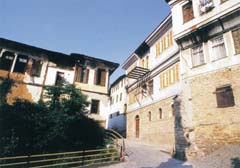
VERIA
The
capital
of
Imathia
prefecture,
Veria,
is
built
on
the
foothill
of
Vermion
mountain.
Some
of
the
sites
that
are
worth
visiting
are
the
Archaeological
Museum,
the
byzantine
churches,
the
traditional
neighbourhoods
of
Kariotissa
and
Barbuta
which
are
samples
of
macedonian
architecture,
Apostle
Paul's
Altar,
a
site
where
tradition
holds
it
that
the
Apostle
of
the
Nations
lectured
etc.
VERGINA
The
natural
wealth
of
Imathia
has
attracted
at
different
periods,
various
people
and
races.
Amongst
them
are
the
Phryges
and
the
Macedonians,
a
Greek
race
related
to
the
Dorians.
Here,
on
the
foothill
of
Pieria,
between
the
villages
Vergina
and
Palatitsia,
the
Macedonians
established
their
capital
Aeges,
and
this
resulted
in
Imathia
becoming
the
heart
of
the
Macedonian
Kingdom,
the
administrative,
political,
religious
and
geographical
center
of
the
state.
EXCAVATIONS
IN
THE
AREA
OF
VERGINA
have
so
far
revealed
a
magnificent
palace
with
beautiful
mosaic
floors,
of
the
period
when
King
Philip
the
II,
and
Alexander
the
Great
were
reigning,
the
ancient
theater
where
Philip
was
assassinated
in
336
b.C.,
the
sanctuary
of
Efklia
with
two
temples,
the
sanctuary
of
the
Mother
of
Gods,
the
hellenistic
citadel
and
parts
of
the
city's
fortresses.
Even
more
impressive
are
the
findings
which
came
to
light
in
the
vast
necropolis.
Among
these
findings
are
the
golden
tombs
of
the
6th
and
5th
century
b.C.,
and
11
Macedonian
style
tombs.
The
most
significant
of
these
tombs
are
the
tomb
of
Evridiki,
Philip's
mother,
with
a
brilliant
marble
throne,
the
tomb
of
Persefoni
and
surely
the
tomb
of
Philip
and
the
tomb
of
the
Prince,
which
might
belong
to
Alexander
the
IV,
the
son
of
Alexander
the
Great,
with
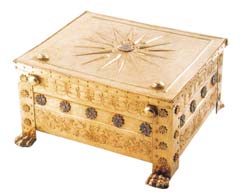
exquisite
wallpaintings
and
priceless
treasures,
which
accompanied
the
honored
dead
to
their
last
dwelling
(beds
made
out
of
gold
and
ivory,
golden
urns,
golden
wreaths,
etc.).
These
tombs
are
open
to
the
public.
NAOUSSA
In
the
city
which
is
built
on
the
foothill
of
eastern
Vermio,
one
can
still
see
blocks
of
traditional
folk
architecture
at
the
neighbourhoods
of
Alonia
and
Metamorfossi.
Earlier
buildings
built
during
the
years
of
the
first
industrial
development
(beginning
of
the
20th
century)
are
of
particular
interest
and
the
same
holds
for
industrial
buildings
of
that
time
such
as
the
factory
of
Logos-Kirtsis-Turpalis.
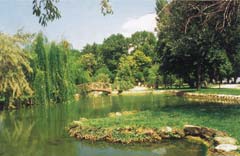
There
are
many
beautiful
landscapes
such
as
the
Park,
the
banks
of
Arapitsa
river,
the
fountains
and
the
grove
of
Agios
Nikolaos.
ALEXANDRIA
It
is
the
centre
of
a
greater
agricultural
region
and
it
is
the
only
city
in
Greece
named
after
Alexander
the
Great.
There
are
a
lot
of
agricultural
industries
in
the
area.
It
has
a
rich
cultular
tradition
and
the
characteristic
head
cover
of
the
traditional
dress,
the
Katsuli,
looks
like
a
helmet
of
an
ancient
greek
fighter.
MUNICIPALITY
OF
IRINUPOLI,
OF
MELIKI,
OF
PLATI,
OF
ANTHEMION,
OF
ANTIGONIDON,
OF
APOSTOLOS
PAVLOS,
OF
VERGINA,
OF
MAKEDONIDOS,
OF
DOVRA
They
are
the
rest
of
the
municipalities
in
Imathia
prefecture.
Agricultural
regions
with
industries
mainly
of
agricultural
products,
they
have
a
significant
cultural
and
folklore
tradition.
EVENTS
A
lot
of
cultural
events
take
place
at
Imathia
during
the
year
covering
every
aspect
of
artistic
creation
(theatre,
music,
dance,
artistic
etc).
The
events
are
organised
mainly
by
the
Cultural
Centres
of
the
Municipalities
and
by
other
cultural
clubs
in
the
area.
The
Centre
of
Cultural
Initiatives
of
Veria
which
belongs
to
the
National
Cultural
Network
of
Cities,
the
Municipal
Cultural
Enterprise
and
the
Municipal
Regional
Theatre
of
Veria
are
institutions
with
a
continuous
presence
in
these
events.
The
most
significant
events
that
take
place
here
are:
Naoussa
Carnival.
Every
year
during
Carnival
festivities,
Naoussa
lives
in
the
beat
of
the
Carnival
with
people
dressed
in
carnival
costumes,
dancing
and
celebration.
“Genitsari
and
Bules”
impress
visitors
with
the
ancient
tradition
that
connects
the
ancient
cult
of
Dionyssos
with
modern
times.
Carnival
festivities
take
place
also
in
other
regions
of
the
prefecture
such
as
Meliki
Municipality,
Makrohori
and
elsewhere.
Early
July
the
International
PIRSOS
and
CIOP
Festival
takes
place
at
Naoussa,
with
the
participation
of
many
dance
groups
from
all
over
the
world.
At
summer
-
during
August
and
September
in
particular
-
we
have
the
most
important
cultural
events,
“IMATHIOTIKA”.
During
this
period
cultural
events
take
place
in
all
Imathia
prefecture
regions.
“Anastenaria”
at
Meliki,
this
very
old
tradition
of
walking
over
burning
coal
are
a
yearly
attraction
for
a
lot
of
visitors.
Finaly,
there
are
local
festivities
in
various
regions
all
over
the
year,
the
traditional
IpanigiriaM
which
are
accompanied
by
various
events


 Naoussa
Carnival.
Every
year
during
Carnival
festivities,
Naoussa
lives
in
the
beat
of
the
Carnival
with
people
dressed
in
carnival
costumes,
dancing
and
celebration.
“Genitsari
and
Bules”
impress
visitors
with
the
ancient
tradition
that
connects
the
ancient
cult
of
Dionyssos
with
modern
times.
Carnival
festivities
take
place
also
in
other
regions
of
the
prefecture
such
as
Meliki
Municipality,
Makrohori
and
elsewhere.
Naoussa
Carnival.
Every
year
during
Carnival
festivities,
Naoussa
lives
in
the
beat
of
the
Carnival
with
people
dressed
in
carnival
costumes,
dancing
and
celebration.
“Genitsari
and
Bules”
impress
visitors
with
the
ancient
tradition
that
connects
the
ancient
cult
of
Dionyssos
with
modern
times.
Carnival
festivities
take
place
also
in
other
regions
of
the
prefecture
such
as
Meliki
Municipality,
Makrohori
and
elsewhere.