The
prefecture
of
Kastoria
is
situated
in
the
western
end
of
West
Macedonia.
It
is
adjacent
on
the
north
with
the
prefecture
of
Florina,
on
the
south,
east
and
southeast
with
the
prefectures
of
Grevena
and
Kozani,
on
the
southwest
with
the
prefecture
of
loannina
and
on
the
west
with
Albania.
The
soil
of
the
region
is
mountainous
and
the
climate
is
continental
with
cold
winters
and
hot
summers.
The
temperature
presents
great
variations
between
winter
and
summer,
and
during
winter
it
is
often
below
zero
so
the
lake
waters
are
frozen.
One
of
the
most
important
works
of
art
in
Macedonia
In
Pentavriso,
in
the
summer
of
1999,
came
to
light
a
very
important
sculpture
ever-found
in
Kastoria.
It
is
the
most
ancient
tomb
anaglyph
of
the
Upper
Macedonia
and
one
of
the
best
classical
works
ever
discovered
in
the
entire
Macedonia.
This
part
of
the
tomb
monument
represents
the
calm
and
sad
face
of
a
woman
who
lived
and
died
here
24
centuries
ago
(one
generation
before
Philippos
2nd).
Hagiography
The
great
development
of
church
architecture
in
the
region
of
Kastoria
in
the
mid-Byzantine
period
resulted
to
the
parallel
flourishing
of
hagiography.
Today
in
the
department
of
Kastoria
there
are
80
temples
preserved,
from
which
26
are
Byzantine
and
possess
about
3.000
square
meters
of
frescoes
while
all
the
churches
possess
rare
samples
of
Byzantine
icons
and
woodcut
temples
of
inestimable
artistic
value.
Mansions
The
mansions
are
building
of
the
17th
and
18th
century
and
they
present
great
interest
for
their
wall-building,
their
architecture
and
their
painting,
while
they
stand
out
for
the
imposing
presence
and
the
grandeur
of
their
unusual
construction.
The
mansions
were
built
in
the
era
where
Kastoria
presented
a
great
economic
growth
as
a
result
of
a
great
commercial
and
manufacturing
activity
of
the
fur-makers
of
Kastoria
in
Greece
and
abroad.
The
mansions,
witnesses
of
the
economic
prosperity
and
the
cultural
growth,
are
characterised
by
safety
and
comfort
and
they
constitute,
today,
unique
pieces
of
the
traditional
architecture
of
the
modern
years.
Folklore
museum
The
Folklore
Museum
of
Kastoria
is
lodged
in
the
mansions
of
Nerantzi
Aivazi
in
the
Doltso
area.
The
articles
of
the
museum
concern
items
used
in
older
times
and
they
are
connected
to
the
activities
of
the
people
of
Kastoria
in
their
homes,
their
work,
their
leisure
and
their
social
life.
The
articles
concerning
the
fur
process
are
remarkable.
The
pavilion
is
divided
into
three
areas,
the
kneading
room,
the
larder
and
the
wine
cellar.
On
the
mezzanine
floor
there
is
a
room
with
a
fireplace.
(Tel.
04670
28603)
Byzantine
museum
The
Byzantine
Museum
of
Kastoria
exhibits
articles
of
the
Byzantine
era
from
the
12th
to
the
17th
century.
The
articles
concern
mainly
portable
icons,
excellently
maintained,
which
have
been
collected
from
lots
of
Byzantine
churches
of
that
region
and
they
constitute
rare
samples
of
the
Byzantine
art.
The
signs
of
influence
of
the
Cretan
School
(15th
century)
are
obvious
on
the
sculptures
and
the
frescoes.
(Tel.04670
26781).
The
Byzantine
museum
contains
one
of
the
most
complete
collections
of
Byzantine
Hagiographies,
portable
icons
and
ecclesiastic
art
that
one
could
find
anywhere
in
the
world.
Around
550
icons
are
guarded
in
the
Byzantine
Museum
of
the
city.
The
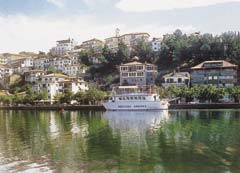
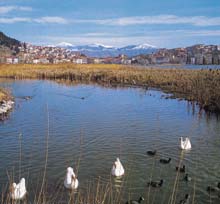
lake
The
lake
of
Kastoria
is
the
most
precious
treasure
of
the
town.
It
is
a
jewel
that
both
the
visitors
and
the
inhabitants
can
enjoy,
as
a
place
of
recreation
and
as
a
stimulus
for
romanticism
and
reminiscence.
At
the
lakeshore
there
are
enough
squares
and
parks.
In
these
specially
formulated
spaces,
the
visitor
has
the
possibility
to
walk
on
the
stone
pavements
and
to
admire
the
unique
natural
beauty
of
the
lake
at
all
seasons.
Lake
Orestida
of
Kastoria
is
considered
morphologically
the
most
beautiful
lake
of
Greece
and
has
been
announced
a
"Monument
of
Natural
Beauty"
by
the
Ministry
of
Culture.
The
natural
basin
of
the
lake,
which
is
enclosed
by
mountains
of
excellent
geomorphology,
constitutes
a
unique
hydrobiotope.
It
is
a
hydrotope
of
great
importance
for
the
aquatic
but
also
for
the
birds
of
prey
and
uses
as
an
area
of
reproduction,
nourishment
and
hibernation.
It
maintains
a
rich
bird
fauna,
which
includes
rare
and
menaced
species.
More
specifically:
Pygmy
Cormorant,
White
Pelican,
Dalmatian
Pelican,
Great
White
Erget,
Glossy
Ibis,
Goosander,
Marsh
Harrier,
Whiskered
Tern,
etc.
In
the
lake
there
are
great
quantities
of
various
fish
species,
and
offers
the
possibility
for
fishing,
both
with
the
traditional
boats
in
the
deep
waters
and
with
fishing
rod
in
the
lakeshores.
Grammos
-
Aliakmonas
The
mountains
of
Grammos
with
the
springs
of
the
river
Aliakmonas,
constitutes
an
interesting
destination
for
the
visitor
of
Kastoria.
The
area
of
Grammos
constitutes
one
of
the
most
productive
virgin
forest
complexes
in
Greece.
The
population
of
the
area
is
sparse
and
the
main
activities
are
forestry,
hunting
and
cattle-breeding.
The
area,
with
its
excellent
geomorphology
and
the
rare
flora
and
fauna,
is
an
ideal
place
for
walking
and
sightseeing.
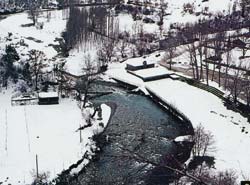
In
the
mountains
of
Grammos
has
its
sources
the
river
Aliakmon,
the
longest
river
in
Greece
(297km).
From
the
sources
of
the
river
and
alongside
the
riverbed
there
is
a
unique
hydrobiotope.
The
visitor
may
walk
in
an
area,
rich
in
water
sources
surrounded
by
dense
forests,
and
admire
the
exquisite
beauty
of
the
ecosystem
of
flora
and
fauna.
Vitsi
The
mountainous
complex
of
Vitsi
with
the
dense
beech
forests,
the
rare
fauna
and
flora,
constitute
on
of
the
most
interesting
destinations
of
the
visitor
in
Kastoria.
The
region
has
remained
untouched
by
the
human
activity
and
maintains
the
unique
beauty
of
the
wild
nature.
The
area,
with
its
exquisite
geomorphology
and
its
picturesque
neighbourhoods,
is
a
great
place
for
walking
and
sightseeing.
Vitsi
is
protected
on
a
national
level
as
a
shelter
for
games
and
constitutes
an
ideal
biotope
for
the
menaced
species
of
bear.
On
the
mountain
Vitsi
and
in
a
distance
of
22
km
from
the
city
of
Kastoria
there
is
an
organised
ski
centre.
The
ski
centre
is
situated
on
the
road
that
leads
from
Kastoria
to
Florina,
on
the
north
side
of
the
village
Polykerasos.
The
road
asphalt
paved
and
it
is
cleared
from
the
snow.
Photography
The
natural
beauty
of
the
region
of
Kastoria
gives
a
lot
of
subjects
to
the
photographer.
The
Lake,
the
mountains
of
Grammos
and
Vitsi,
the
Aliakmon
river,
the
churches
of
a
unique
architecture,
the
picturesque
mountain
settlements,
the
rare
flora
and
fauna,
the
beautiful
routes
in
the
forest
and
on
the
mountains
are
some
of
the
areas
that
the
amateur
but
also
the
professional
photographer
may
use
as
subjects
to
shoot.
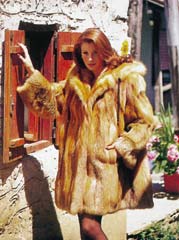
Fur
industry
The
fur
industry
constitutes
the
most
important
economic
activity
in
the
region
of
Kastoria.
The
art
of
fur
processing
and
the
trade
of
fur
products
developed
during
the
Byzantine
era
and
since
then,
the
region
of
Kastoria
was
evolved
to
the
centre
of
the
world
interest
in
the
fur
trade
sector
and
the
unique
centre
of
fur
processing
in
Europe.
The
fur
processing
and
trade
constitutes
the
main
source
of
income
for
the
inhabitants
of
the
region.
The
development
of
the
fur
industry
and
the
blooming
of
fur
products'
trade
had
as
a
result,
since
the
19th
century,
a
great
number
of
the
region's
inhabitants
to
travel
around
the
world
and
to
create
lots
of
economically
prosperous
communities.